Integrating Genotype, Environment, and Processing (G × E × P): A Farm-to-Food Framework for Climate-Resilient Rice Quality
DOI:
https://doi.org/10.56868/cesi.v2i1.48Keywords:
Rice Grain Quality, Genotype × Environment × Processing, Climate Resilience, Starch Functionality, Postharvest Processing, Food QualityAbstract
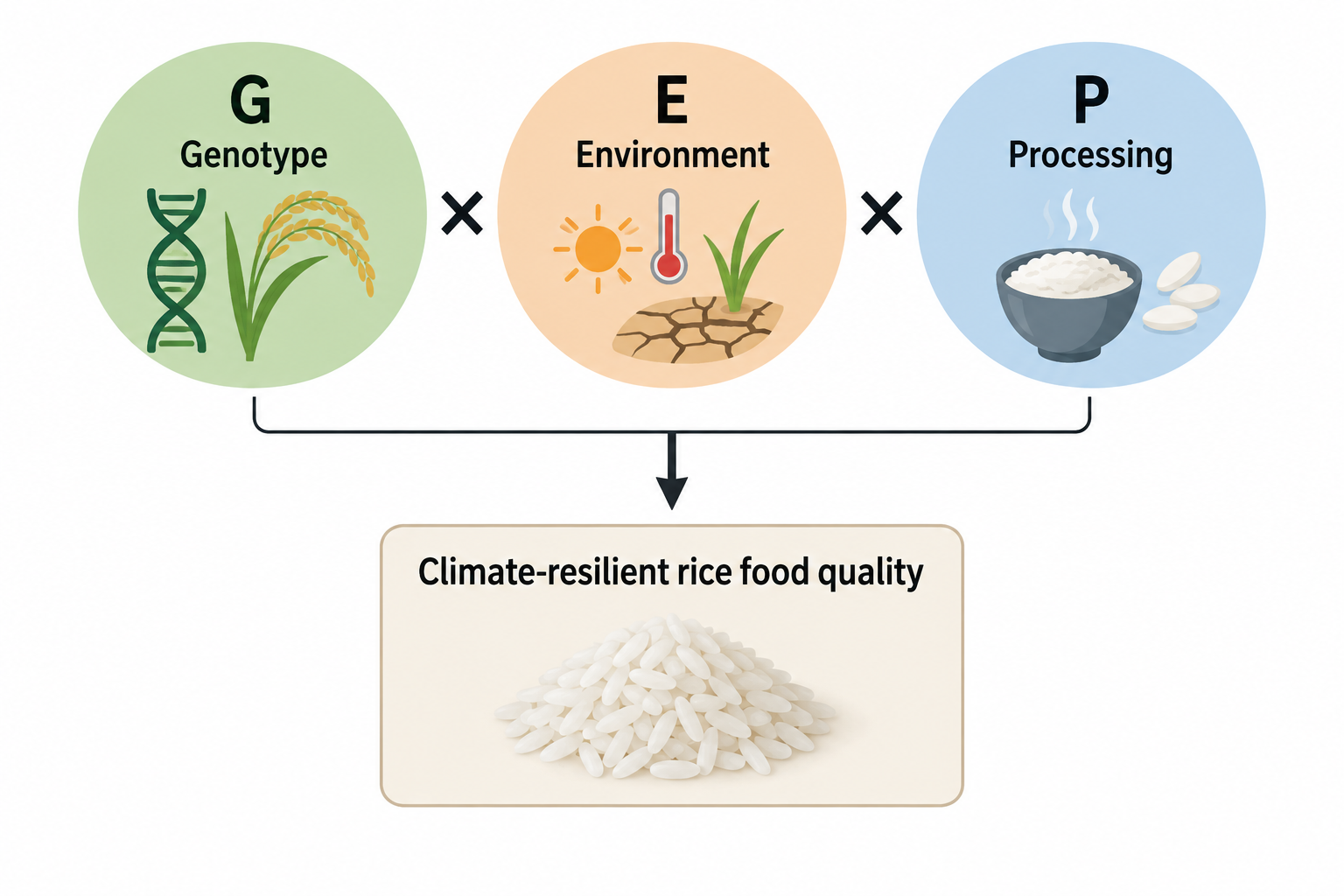
Climate change affects not only rice production but also grain quality and subsequent food-processing performance. Although genetic determinants, environmental stresses, and postharvest processing have been extensively investigated, their integration across the grain-to-food continuum remains limited. This review synthesizes evidence on how genotype (G) establishes grain-quality potential, how climate-related environmental conditions (E) particularly heat, drought, and salinity during grain development modify grain composition and structure, and how processing (P) further transforms these characteristics into final food-quality outcomes. Particular attention is given to starch structure, proteins, lipids, and bioactive compounds and their implications for processing behavior, texture, digestibility, resistant starch formation, and nutrient retention. Based on established and emerging relationships across these domains, we propose an evidence-informed Genotype × Environment × Processing (G × E × P) framework for understanding rice-quality resilience from grain development to consumption. The framework is presented as an empirically testable model rather than an established universal three-way interaction. Integrating grain-quality stability into breeding and processing strategies could support the development of rice cultivars and food products that maintain desirable technological and nutritional characteristics under increasingly variable climatic conditions.
Downloads
Downloads
Published
Issue
Section
License
Copyright (c) 2026 Climate, Economics & Social Impact

This work is licensed under a Creative Commons Attribution 4.0 International License.